Why What You Carry Decides the Park Day Outfit More Than Weather

Quick Answer: A park day outfit fails when it cannot absorb what you are carrying. Before choosing clothes, decide where the phone, keys, water, snacks, and the layer everyone takes off at noon will actually live. That determines pocket requirements, bag type, and whether your top can take a strap without dragging. Outfits chosen for the forecast alone routinely fall apart by hour two, because the forecast changes what you wear and the load changes what works.
The forecast said mild and breezy, so you dressed for mild and breezy and you were right.
And by 11am you are carrying two jackets, a water bottle, someone’s shoes, and a bag that has slid off your shoulder for the fortieth time. The outfit is not wrong for the weather. It is wrong for the cargo.
Why does the load matter more than the temperature?
Because temperature changes in one direction and the load only ever grows.
You can solve temperature with one decision. A layer you can remove covers a fifteen degree swing, and this blog has covered the layering side of it separately. It is a solved problem.
The load is not solvable once you have left the house. Every item that comes off someone becomes something you hold. Every snack requires a hand. Every time you need your phone you need it accessible, not buried.
The failure is always the same shape. You end up with no free hands at the moment you need both, which is usually when someone is climbing something. That is why the hands-free principle is the organising rule of park day dressing rather than a nice-to-have.
The load also determines what clothing survives. A bag strap on an unstructured knit drags the shoulder out of shape within an hour. A heavy pocket in a soft legging pulls the waistband down. The clothes are not failing at being clothes, they are failing at being load-bearing.
Which means the sequence is backwards for most people. Decide the carry first, then dress around it. It takes thirty seconds and it changes the outfit.
What does a load-first outfit actually look like?
Start from where five things live, then work outward.
The five items, and where each should go:
- Phone. In a pocket you can reach without unshouldering anything, or in the front pocket of a cross body. Not in the main compartment of a tote, ever.
- Keys. The deepest, most secure pocket, ideally zipped. The most common park day loss.
- Water. In a bag with a side pocket, or a bottle with a strap. Holding a bottle occupies a hand permanently.
- Snacks. Bag, main compartment, and more than you think.
- The removed layer. This is the item nobody plans for. A jacket tied at the waist is fine. Two jackets and a cardigan are not.
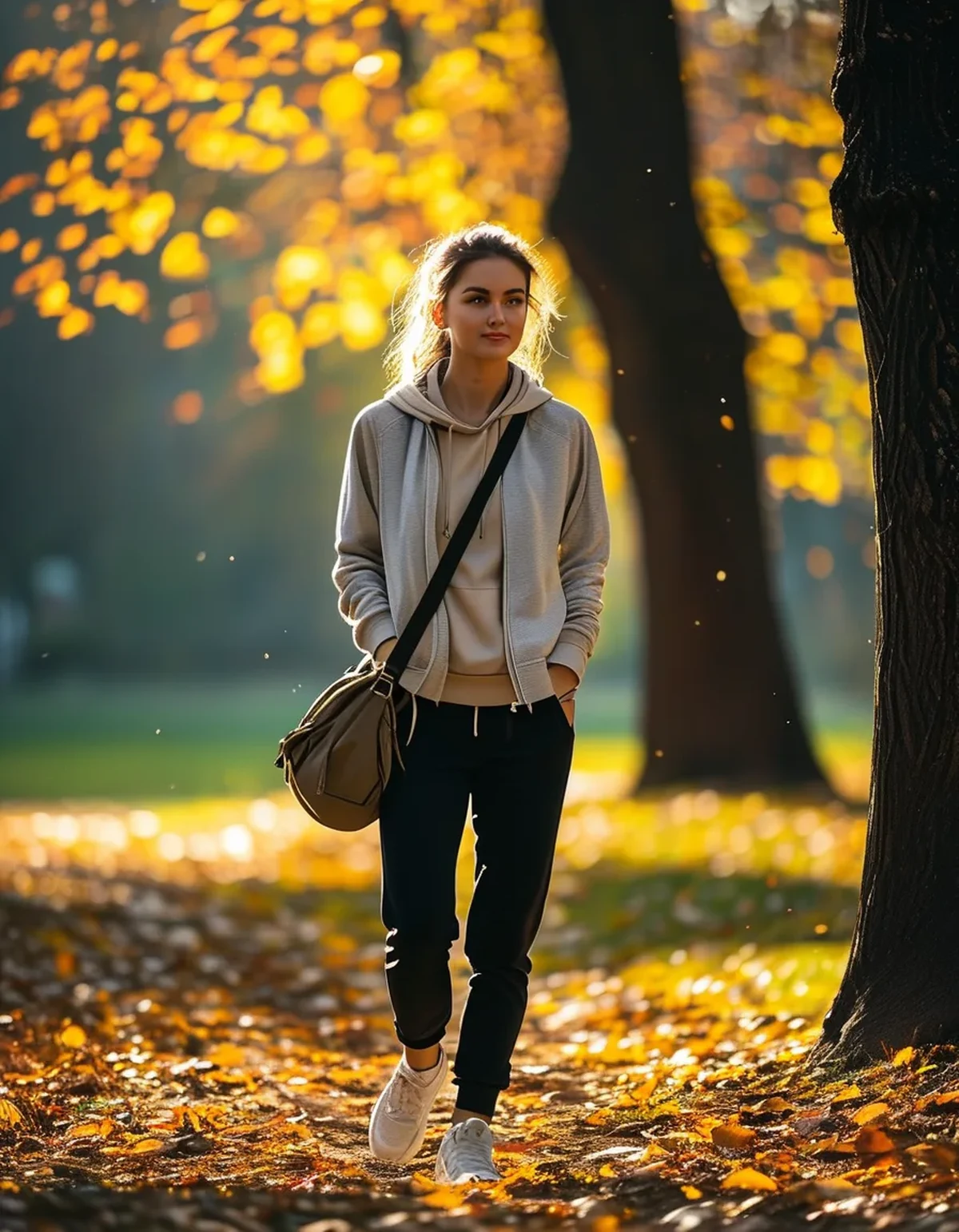
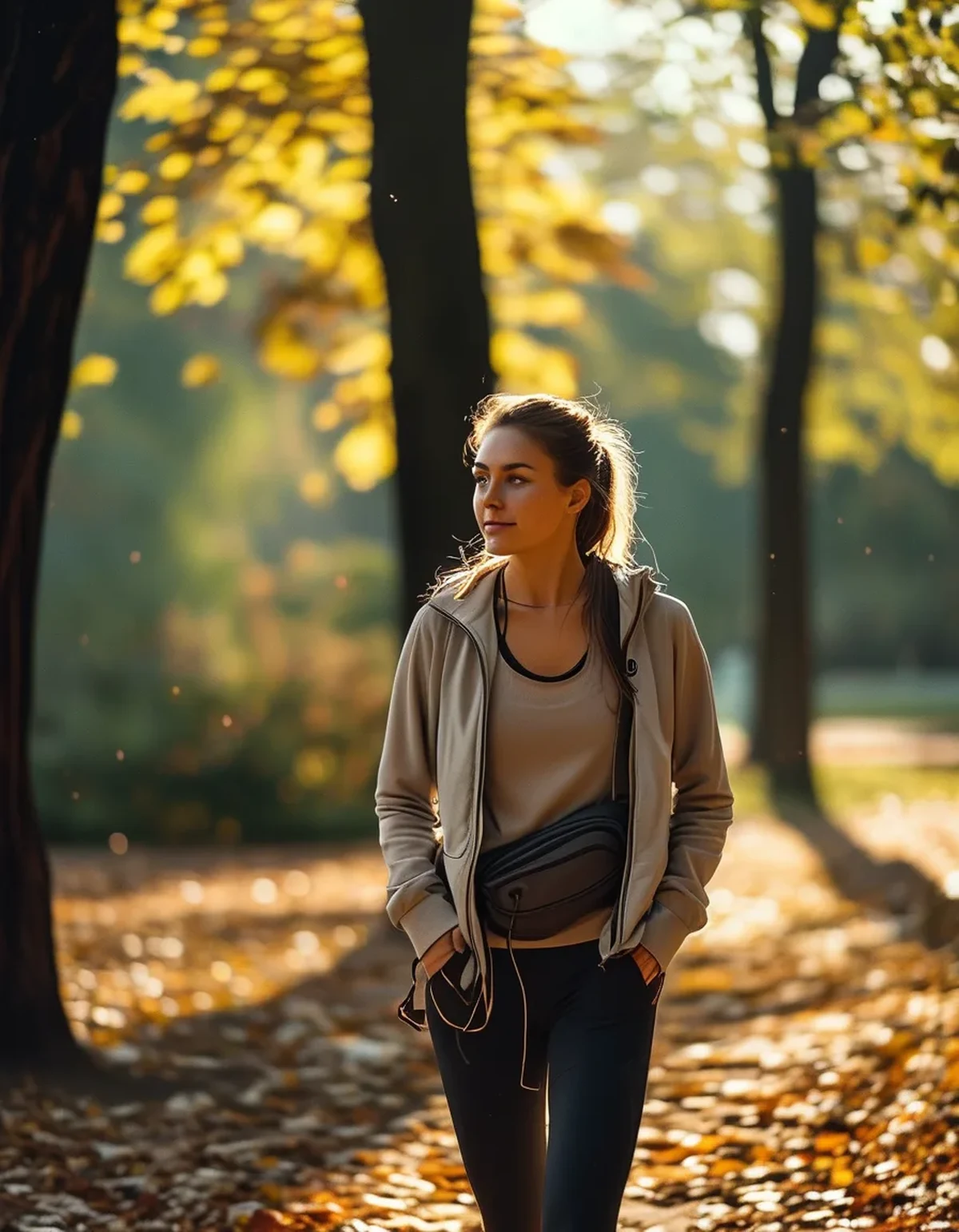
The bag that works: a cross body worn across the chest, or a small backpack. Both keep hands free and neither slides. A shoulder tote fails the moment you bend down, which at a park is constantly.
The trousers that work: anything with genuine pockets that close. Deep side pockets on joggers or cargo-style trousers, or leggings with a zipped side pocket. A pocket without a closure is a pocket that empties when you crouch.
The top that works: something structured enough at the shoulder to carry a strap without deforming. A cotton-blend sweatshirt, a knit with a firmer gauge, or a shirt. A very soft, loosely knit top will be stretched at the shoulder by the end of the day.
The layer that works: one, not two. A single light jacket that ties around the waist comfortably beats a cardigan plus a shell, because you will be carrying whichever ones are not being worn.
What changes when the weather is genuinely uncertain?
The bag gets bigger and the clothing gets simpler, not the other way round.
The instinct is to add layers. The better move is to add capacity. If there is a real chance of a temperature swing or rain, take a slightly larger bag rather than wearing more, because everything you wear against a possibility becomes something you carry when the possibility does not arrive.
Pack the layer, wear the base. Dress for the warmest likely condition and carry for the coolest. This inverts what most people do and it produces far fewer things in your hands.
A packable shell is worth its place. A light windproof layer that stuffs into its own pocket takes almost no bag space and covers both wind and light rain. A fleece or a knit cardigan performs the same job at ten times the bulk.
Footwear is the one thing you cannot fix from a bag. Choose for the worst likely ground rather than the best. Damp grass in early autumn stays damp all morning, which this blog has covered in the context of ruined shoes.
Seasonal note for right now. The transition out of late summer produces exactly the conditions that break this: warm middays, cool mornings, heavy dew, and low sun. The morning layer will be off by 11 and back on by 4, and it will be in your hands for the five hours in between unless the bag has room for it.
5 Mistakes That Turn a Good Outfit Into a Bad Day
1. A shoulder bag instead of a cross body. It comes off every time you bend down, which is dozens of times. This is the highest-frequency annoyance of the entire day and it is a thirty-second fix before you leave.
2. Pockets without closures. Anything in an open pocket exits when you crouch, sit on grass, or go down a slide. Phones and keys need a zip or a deep secure pocket, and most activewear pockets are neither.
3. A soft knit top under a strap. Fine-gauge and loosely knit tops stretch permanently at the shoulder under a bag strap over a few hours. If you are carrying, wear something with more structure at the shoulder or wear the strap across the body.
4. Two mid layers instead of one shell. A cardigan and a jacket is two things to carry when it warms up. One packable shell over a slightly warmer base does the same job and only ever occupies one hand.
5. Dressing for the forecast rather than for the ground. The air can be perfectly pleasant while the grass is soaking. This is the specific autumn failure and it is what ruins shoes and hems, entirely independently of what the temperature does.
FAQ: Park Day Outfits, Answered
What is the most important thing in a park day outfit?
Hands free. A cross body bag or small backpack, secure pockets for phone and keys, and only one removable layer. Everything else is secondary, because the day fails at the moment you need both hands and do not have them.
Should I wear more layers or carry them?
Carry them. Dress for the warmest likely condition and pack for the coolest. Anything you wear against a possibility becomes something you hold for hours when the possibility does not arrive.
Why does my bag keep sliding off at the park?
Because a shoulder bag needs a level shoulder and a park day involves constant bending and crouching. A cross body worn across the chest or a small backpack removes the problem entirely.
TL;DR:
- Decide where the phone, keys, water, snacks, and the removed layer will live before choosing anything to wear.
- Cross body or backpack, never a shoulder tote. Pockets need closures or they empty when you crouch.
- Dress for the warmest likely condition and carry for the coolest. One packable shell beats two mid layers.
- Soft knit tops deform under a strap. Pick something with structure at the shoulder if you are carrying.
Do the five-item check at the door. It takes thirty seconds and it is the difference between a good outfit and a good day.
See It in Motion
Seen here: Super High Waist Embossed Yoga Leggings with Inner Pocket — shop it on bubblelime.com
Keep Reading
This article is for general informational and styling purposes only. Fit, sizing, and product availability may vary.