Why Late Summer Park Outfits Need a Completely Different Plan Than July Ones

Quick Answer: Late August afternoons are as warm as July ones, but the evening drops faster and further, the ground holds more moisture, dew arrives earlier, mosquitoes are at their seasonal peak, and the low sun angle changes both glare and how colours read. The practical outfit changes: bring one packable layer regardless of the forecast, choose a bottom half that tolerates damp ground, cover ankles by early evening, and pick colours that hold up in warm low light rather than in overhead midday sun.
You wore the July outfit and you were fine until 6:30, when the temperature dropped and the mosquitoes arrived together.
That is the whole difference in one sentence.
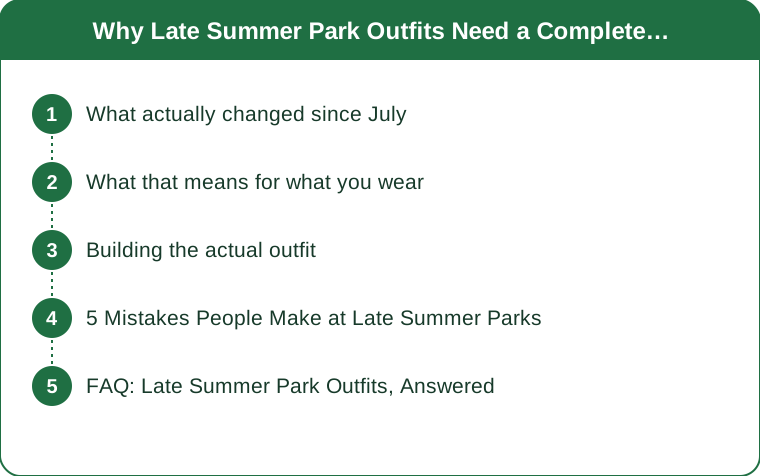
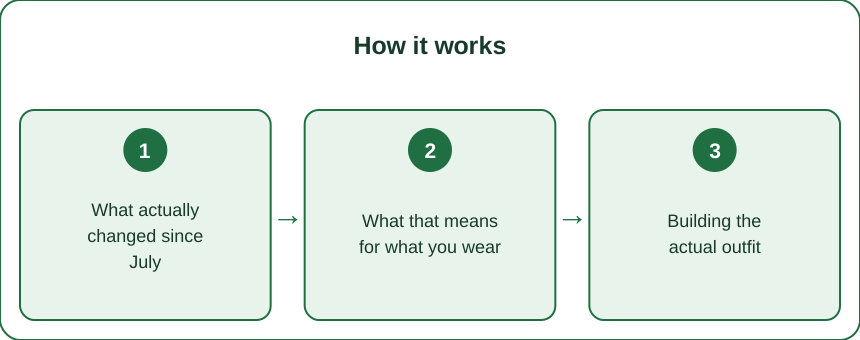
What actually changed since July
The evening drop is steeper. Shorter days mean less accumulated heat and faster cooling after sunset - a ten to fifteen degree fall in the hour after sundown is common in late August, where July held its warmth much longer.
The ground is different. Dew forms earlier and more heavily, and grass that was bone dry at 7pm in July is damp by 6pm in late August. Anything sitting directly on it gets wet.
Mosquito activity peaks in late summer across much of the US, and it concentrates around dusk - which coincides exactly with the part of a park day people plan for least.
The sun sits lower, which means more direct glare into your eyes at eye level, more warmth in the light itself, and long shadows that change how an outfit reads in photographs.
And the schedule shifts underneath you. Park days in late August are increasingly late-afternoon-into-evening rather than midday, which changes the requirements more than the calendar suggests.
What that means for what you wear
Bring one packable layer, always. An overshirt, a light knit or a windbreaker that compresses into a bag. This is the single change that separates a good late-summer park day from one that ends early.
Choose a bottom half that handles damp ground. A wide cotton trouser wicks dew straight up the hem; a quick-dry fabric, a denim, or a dedicated blanket solves it. This is the most common late-summer complaint and it is entirely preventable.
Cover the ankles by early evening. Ankles and feet are where dusk mosquitoes concentrate, and a sock plus a full-length hem changes the evening substantially.
Favour a closed shoe over a slide for evening plans. Grass is wetter, ground is cooler, and the temperature drop reaches feet first.
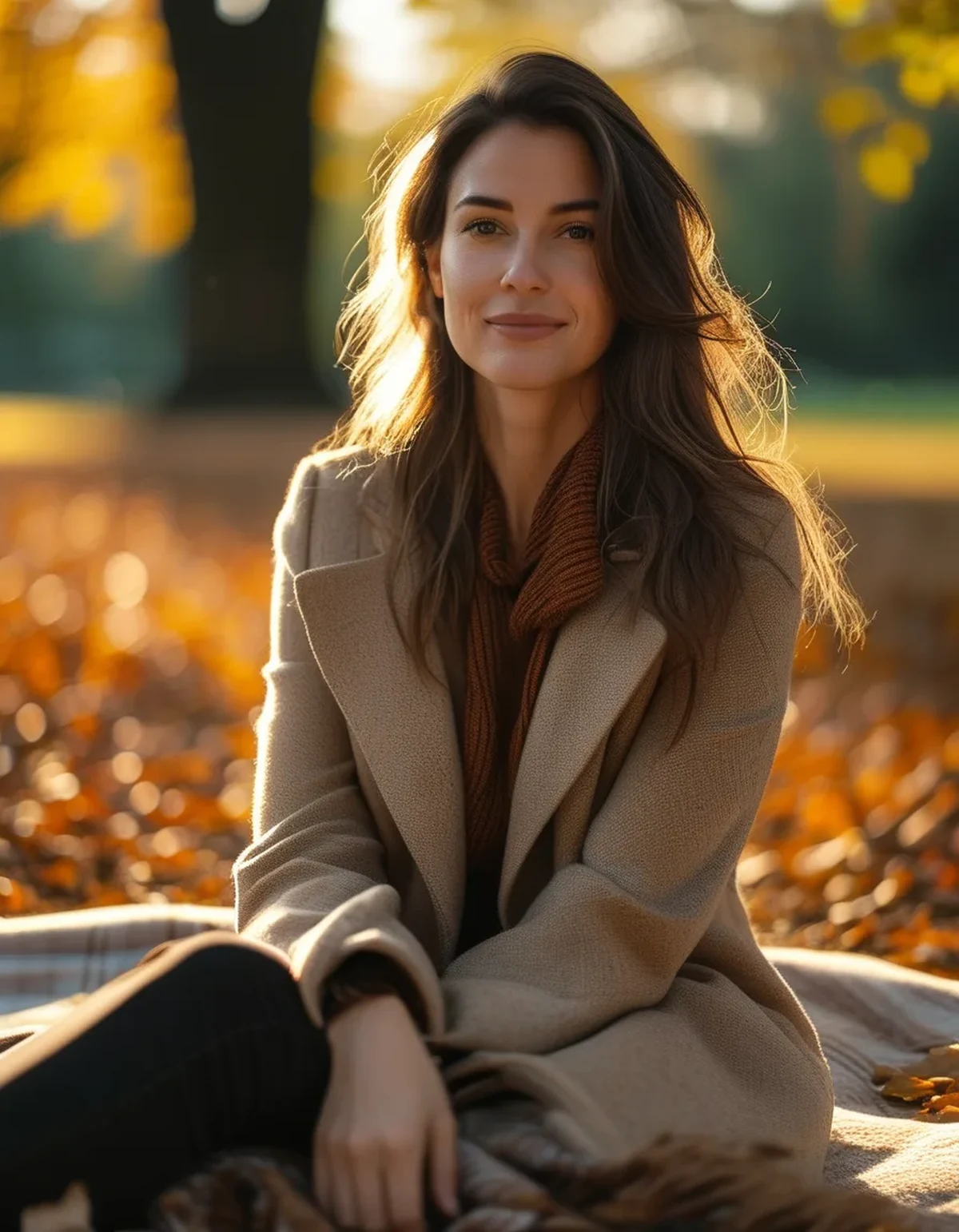
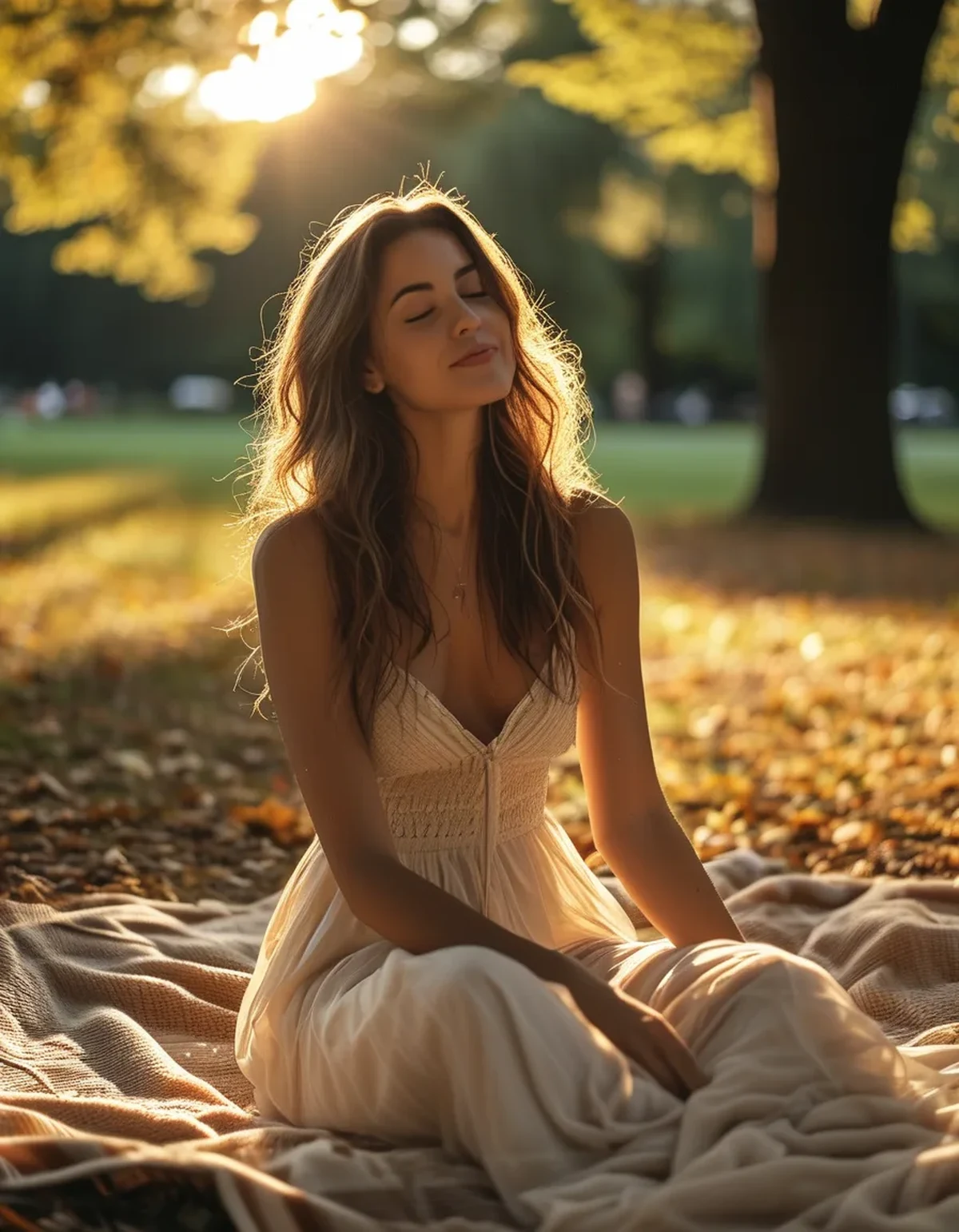
Pick colours for warm low light. Cool pastels can look washed out in golden-hour light; warmer tones, deeper colours and cream hold up considerably better in late August evening light than they do at midday.
And bring a scarf or large square of fabric. It is a ground cover, a wrap, a picnic surface and a sun shield - the highest-utility item you can carry for the weight.
Building the actual outfit
Start from the evening version and subtract for the afternoon. Plan for 7pm and remove layers for 3pm, rather than the reverse - which is what everyone does and why everyone is cold.
A full-length lightweight trouser beats shorts for late summer parks in most cases: cooler ground, mosquitoes, and dew all point the same way, and a loose linen or technical trouser is not meaningfully warmer at 3pm.
A short-sleeve top with a packable overshirt is the workhorse combination, because it covers a twenty-degree range with one small item in a bag.
Choose a bag that can be set on damp grass, or one you are willing to put down. A soft fabric tote absorbs dew; a coated or structured one does not.
Add sunglasses even for evening. The low sun angle in late August puts direct glare at eye level for the entire hour before sunset, which is a genuine comfort issue rather than a style one.
And keep one thing structured - a real shoe, a stiffer bag - so the outfit does not read as entirely soft, which is the usual failure mode of comfortable park clothes.
5 Mistakes People Make at Late Summer Parks
Dressing for the afternoon forecast. The forecast high describes 3pm. Most late summer park time is now happening after 5pm, which is a different set of conditions entirely.
Sitting directly on grass in absorbent fabrics. Dew and residual moisture come up through cotton within minutes, and the resulting damp patch lasts the rest of the evening.
Applying repellent to skin only. Mosquitoes bite through thin stretchy fabric readily, and ankles and feet get missed almost universally. Treat clothing and cover ankles.
Wearing new shoes on grass. Late summer ground is softer and damper than midsummer ground, and grass stains and water marks are much more likely than they were six weeks ago.
Forgetting that the sun sets forty minutes earlier than it did in July. Plans made on July habits routinely end up finishing in the dark, cold and unprepared, which is not a wardrobe failure so much as a scheduling one that the wardrobe then has to absorb.
FAQ: Late Summer Park Outfits, Answered
Is it really worth carrying a layer when it is 85 degrees?
Yes. The afternoon temperature tells you nothing about 7:30pm in late August, and the layer weighs almost nothing.
Shorts or trousers?
Trousers, on balance, for evening park time - mosquitoes, dew and the temperature drop all favour them, and lightweight fabric keeps them comfortable in the afternoon.
What is the best fabric for sitting on grass?
Anything quick-drying, or bring a ground cover. Heavy cotton and linen both absorb readily and stay damp.
How do I keep the outfit from looking like gym clothes?
One structured piece - a real shoe, a woven overshirt, a bag that holds its shape. The rest can be as soft and comfortable as you like.
Do colours really read differently in late summer light?
Noticeably. The warmer, lower light flatters cream, camel, rust and deeper tones, and tends to flatten cool pastels that looked excellent at midday in June.
TL;DR:
- Late August afternoons match July; the evenings do not, dropping ten to fifteen degrees within an hour of sunset.
- Bring one packable layer regardless of forecast, and plan the outfit from 7pm backwards rather than from 3pm forwards.
- Choose bottoms that tolerate dew, cover ankles by early evening, and treat clothing rather than only skin for mosquitoes.
- A closed shoe beats a slide once evening plans are involved, and a large scarf is the highest-utility item you can carry.
- Warm low light flatters cream, camel and deeper tones and flattens cool pastels.
The sun now sets around forty minutes earlier than it did in July, which is the change most park plans still have not absorbed.
Keep Reading
This article is for general informational and styling purposes only. Fit, sizing, and product availability may vary.