Why Park Day Outfits Fall Apart the Moment the Sun Drops Behind the Trees

Quick Answer: Air temperature is not what you feel sitting in a park. Shade removes direct solar radiation, which can account for a perceived difference of 8 to 15 degrees, and the ground cools faster than the air while you are sitting on it. Add a light breeze on skin that is slightly damp and the effective temperature drops further. A park outfit needs to be built for the shaded, seated, late-afternoon version of the day rather than the sunny standing version you left the house in.
The forecast was not wrong. It just measured something different from what your body is experiencing.
Here is the gap, and how to dress for it.
Why does shade feel so much colder than the temperature says?
Because a forecast measures air temperature in the shade, and standing in the sun you are receiving a large amount of additional energy that the number does not include.
Direct sunlight delivers meaningful radiant heat to your skin — on a clear day, enough that the same air can feel dramatically different depending on whether you are in it. The perceived difference between direct sun and full shade commonly runs to 8 to 15 degrees, which is the entire reason a park feels like two different places.
So when the sun goes behind a tree line, you lose that entire input at once. Nothing gradual about it.
Three things compound it:
You are sitting on ground that is losing heat. Grass and soil radiate heat away rapidly once the sun leaves, and shaded ground can be several degrees below air temperature. Sitting directly on it is a continuous conductive drain, particularly through thin fabric.
Any moisture on your skin evaporates. Damp skin from a warm afternoon cools rapidly the moment air moves across it. This is the same mechanism that makes a breeze pleasant at 30 degrees and unpleasant at 20.
Your activity level dropped. You walked to the park generating heat, then sat down and stopped. Metabolic heat production falls substantially at rest, and it takes about twenty minutes to notice.
Does this get worse as the season turns?
Substantially. The sun sits lower every week, so shade arrives earlier and lasts longer, and the ground has less time to reheat between days.
What should the layer actually be?
Something specific, because most people bring the wrong thing.
What does not work well:
A thin cotton overshirt. Cotton is a poor insulator and worse when damp, and a light open weave does very little once air is moving.
A denim jacket. Genuinely useful for wind, genuinely useless for warmth, and heavy for what it does.
A hoodie, which works but is bulky enough that most people leave it behind and then need it.
What works:
- A fine merino knit. Warm for its weight, packs to almost nothing, handles a wide temperature range and does not get clammy. The single best answer for this specific problem.
- A light quilted or insulated layer. Modern synthetic insulation is extremely compressible and adds real warmth for very little bulk.
- An oversized shirt in a fabric with some weight — a heavier cotton twill, a light flannel. Blocks wind, adds a layer, and reads as styled rather than as emergency clothing.
- A large scarf or a blanket wrap, which doubles as something to sit on and is the most versatile item you can bring.
And the item nobody packs and everybody needs: socks. Bare feet in sandals on cooling ground is where a lot of people first feel cold, and it is easily fixed.
What Nobody Tells You About Sitting on the Ground
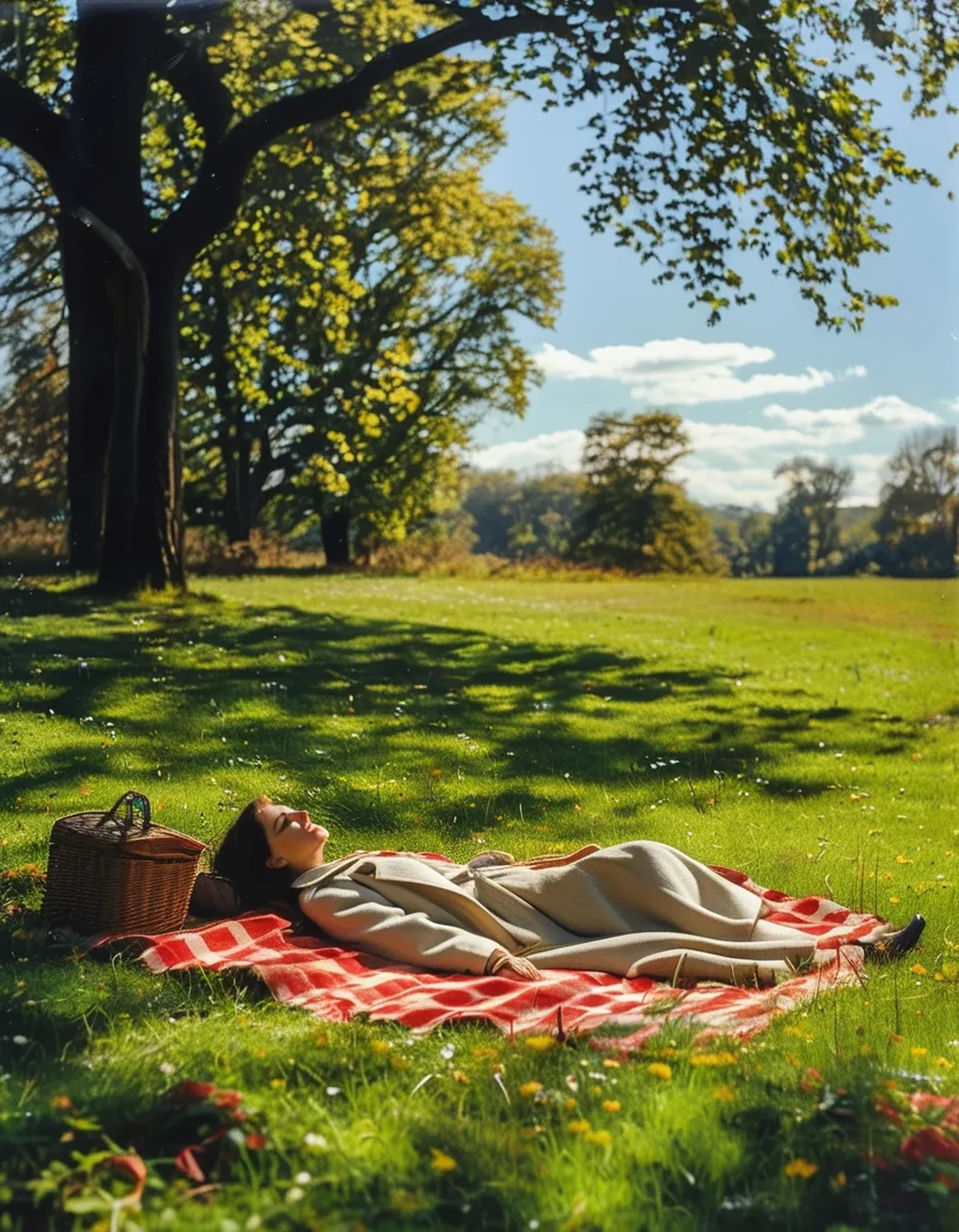
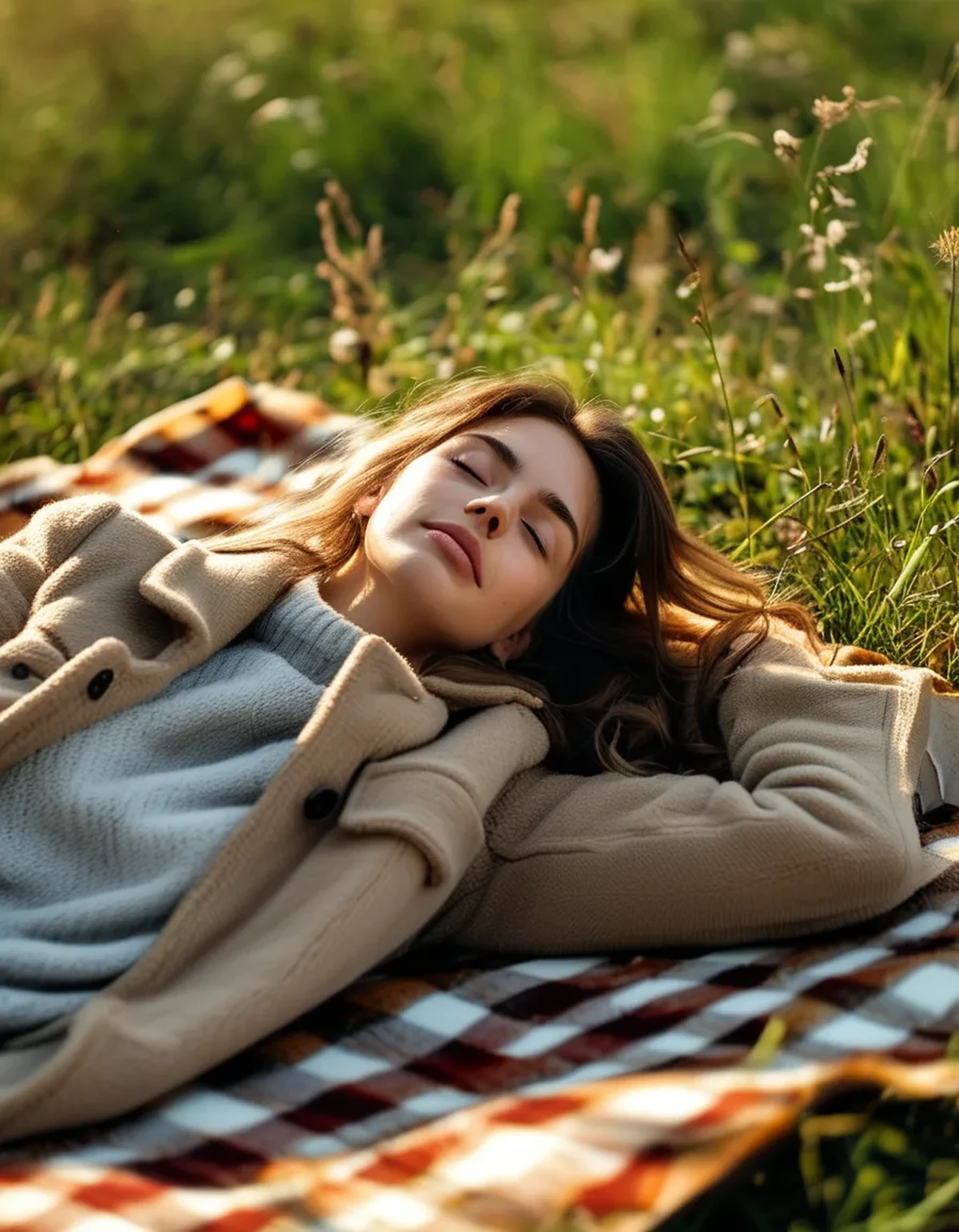
The blanket matters more than the jacket. Conductive heat loss into cool ground is faster than convective loss into cool air. A layer between you and the grass — ideally something with a waterproof backing, since dew starts forming much earlier in the evening from late August — does more for comfort than an extra top does.
Late-summer grass is damp long before it looks damp. As nights cool, dew forms earlier and the ground holds moisture into the afternoon under shade. A thin blanket wicks it straight through. This is the single most common reason people leave a park earlier than they planned.
Your hem and cuffs are doing more than you think. Wide cropped trousers, loose sleeves and open necklines are all excellent for a hot afternoon and all act as chimneys once air moves. The same outfit with elasticated or narrower openings feels several degrees warmer with no extra fabric.
The seated fit is a different fit. A waistband that is perfect standing digs in sitting, a top that covers standing rides up sitting, and mid-rise anything creates a cold gap at the lower back. This is a comfort issue and a warmth one — an exposed lower back is where people feel cold first.
Light colours stop helping and start costing. Pale fabrics reflect solar radiation, which is exactly what you want at 2pm and exactly what you do not want at 6pm. Darker layers absorb what warmth is left.
Insects change with the shade. Mosquitoes and midges become active as the sun drops and prefer shaded, still, damp air. Covered ankles and wrists are a comfort decision as much as a temperature one at this time of year.
How do I build one outfit that works for both halves of the day?
Design for the shaded and seated version, and remove layers for the sunny standing version. Not the other way round.
The structure:
- Base: something with sleeves you can push up. A long-sleeve light knit or a fitted long-sleeve top handles both directions. Short sleeves only work if you are certain about the layer.
- Bottom: full-length, in a fabric with a bit of substance. A wide-leg cotton trouser, a heavier jersey, or a light denim. Bare legs on cool ground are the fastest route to being cold.
- The layer, packed rather than worn. Merino knit or light insulation, chosen because it takes no space and therefore actually comes with you.
- Closed shoes and socks in the bag, even if you arrive in sandals.
- A ground layer — a blanket with a backing, or a mat. Non-negotiable from here through autumn.
- A large scarf, which is the most useful single item: neck warmth, a wrap, a ground cover, a bag for things.
The rule that makes it work: if you would be slightly too warm walking to the park in it, you have dressed for the sunny half. Take one thing off and put it in the bag.
What about kids?
Same logic, more urgently — children have a higher surface-area-to-mass ratio and lose heat faster. And they are usually sitting or lying directly on the ground. A spare warm layer and dry socks per child is worth the bag space.
FAQ: Park Day Dressing Questions, Answered
How much colder is shade, really?
In terms of measured air temperature, often only a couple of degrees. In terms of what you feel, commonly 8 to 15 degrees, because direct sunlight is a large radiant input the thermometer does not report.
What time does it actually start to turn?
As a rule of thumb through late summer, roughly two hours before sunset, and earlier if you are under trees or beside water. It moves earlier by several minutes every week from now.
Is a picnic blanket with a waterproof backing worth it?
Yes, and it is the highest-value item in this whole article. It solves damp ground and conductive heat loss at the same time.
Why do I feel colder after eating?
Blood flow shifts toward digestion, and you have usually been sitting still for a while by then. Both effects are real and they arrive together.
Does being near water change things?
Noticeably. Water cools the air above it and generates a light breeze in the evening. Assume a park by a river or lake turns cool earlier and harder than an inland one.
TL;DR:
- A forecast measures shaded air temperature — direct sun adds a perceived 8 to 15 degrees you lose instantly in shade.
- The ground is the bigger heat drain when you are sitting. A backed blanket beats an extra top.
- Damp grass arrives earlier every week now as dew forms sooner in cooling nights.
- Pack a fine merino knit or light insulated layer — bulk is why people leave the layer at home.
- Socks and closed shoes in the bag, always. Feet go first.
- Dress for the shaded, seated, late version of the day and strip down for the sunny part.
The outfit was not wrong at two o’clock. It just was not designed for the park you are sitting in at six.
Keep Reading
This article is for general informational and styling purposes only. Fit, sizing, and product availability may vary.