What to Wear for a Park Day That Turns Into Dinner

Quick Answer: Build the outfit around one washable base layer that reads as clothing rather than activewear, then carry exactly two things: a structured shoe swap and one woven layer. That combination handles grass, an evening temperature drop, and a restaurant without a costume change.
The plan was two hours at the park. It is now 6:40 PM, someone suggested tacos, and you are wearing a picnic blanket’s worth of grass on the back of a pair of pale shorts. This is a solvable problem, but only if you solve it before you leave the house.
What makes a base layer work for both settings?
One rule: it has to look like an outfit while sitting on the ground.
Most day-to-night advice assumes you are standing. Park day is mostly sitting, often on grass, often cross-legged. That eliminates a lot of otherwise good options — anything that rides up, anything with a waistband that digs when you fold, anything pale enough to show a grass stain permanently.
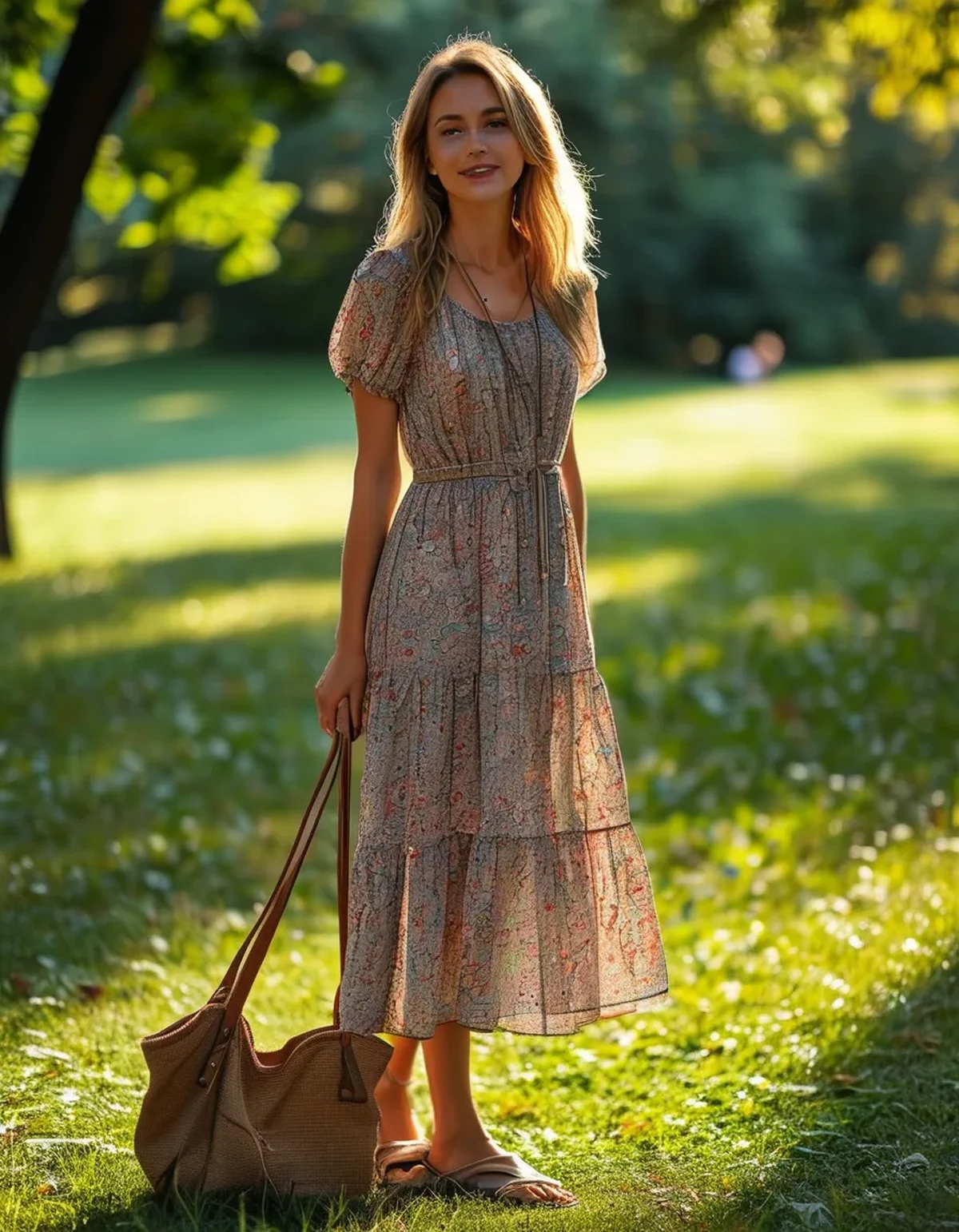
What works: a mid-weight knit midi dress, a dark relaxed trouser with a soft waistband, or a wide-leg pant in a fabric with some slub or texture. The texture is doing real work here, because it hides the small marks that a flat surface would display.
Avoid: white bottoms, linen that creases into a map of your afternoon, and anything with a visible athletic logo.
Why does the shoe do most of the transition?
Because it is the fastest change and the most visible one.
A park outfit with a flat sandal or a sneaker reads as leisure. The identical outfit with a low block heel, a leather slide, or a clean loafer reads as dinner. Nothing else changes, and nobody notices you did anything.
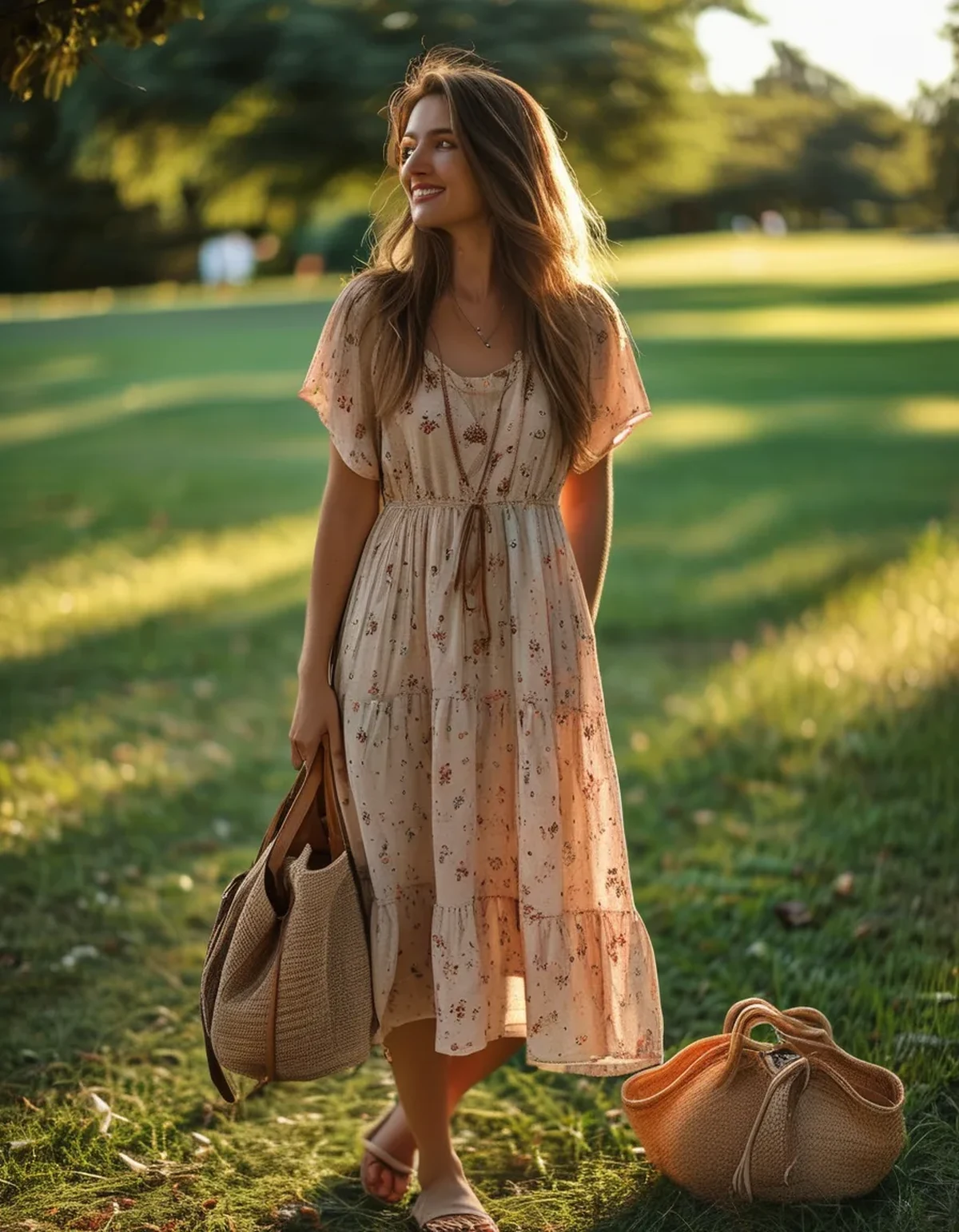
Practically: wear the park shoe, carry the dinner shoe. A flat pair in a tote takes almost no room.
The reverse also works if the dinner is casual. Wear the nicer shoe, bring cheap slides for actual lawn time, and let your feet be comfortable during the part where nobody is looking at them anyway. The shoe is the switch, and you get to decide which direction it flips.
What is the one-layer rule for late August evenings?
In mid-August the drop from afternoon to sunset is often 15 to 20 degrees, and it arrives fast once the sun clears the treeline.
You need exactly one layer, and it should be a woven, not a knit. A cotton overshirt, an unlined blazer, or a light canvas jacket does three things a cardigan cannot: it holds its shape when carried, it looks intentional over a dress, and it blocks the evening breeze that a loose knit lets straight through.
Carry it over the tote strap rather than tied at the waist. Tied at the waist it adds bulk at the hip and immediately signals that you have been outside all day.
One layer, chosen well, replaces the two or three you would otherwise pack.
5 Mistakes Everyone Makes on a Park-to-Dinner Day
-
Wearing pale bottoms. Grass stains chlorophyll into fabric within minutes and it is genuinely hard to remove. Mid-tone and dark colors, or a print, forgive the whole afternoon.
-
Packing a full change of clothes. You will not change. A bag you have to carry all afternoon is worse than a slightly imperfect outfit.
-
Bringing sunglasses but not sunscreen. Late-August sun is still strong enough to burn, and a sunburn changes what you want to wear that evening more than any styling decision.
-
Choosing a bag with no structure. A slouchy tote holds a blanket and a shoe swap fine, but it sags into a shapeless lump at dinner. A tote with a flat base solves both.
-
Forgetting the sit test. Try sitting cross-legged in the outfit at home for 30 seconds. The third mistake catches people out, but this one is the difference between an enjoyable afternoon and constant adjusting.
What should actually be in the bag?
Keep it to a short, deliberate list.
- The shoe swap
- The woven layer
- A compact blanket or a large scarf that doubles as one
- Sunscreen and a hair tie
- Wipes, which handle both hands and the small stain you will inevitably acquire
That is it. The temptation is to add a change of top for dinner, and it is almost always the wrong call. The extra weight follows you all day for a change you will make in a restaurant bathroom, badly, in poor light.
One strategic exception: if you are lying on the grass rather than sitting, a light scarf under you protects the outfit better than anything you could bring to change into.
FAQ: Park Day Outfit Questions, Answered
How do I get grass stains out if it happens anyway?
Treat it before it dries with a little dish soap or an enzyme stain remover, and skip the hot water — heat sets chlorophyll. Do not put the garment in the dryer until the stain is fully gone.
Are shorts ever the right call for this?
Yes, in a mid-tone or dark color with a longer inseam, paired with a shoe that has some structure. The failure mode with shorts is not the shorts, it is the drop in evening temperature at bare-leg exposure.
What about a dress with a park blanket?
A midi in a knit is the single most reliable choice for this day. It sits well, it hides marks, and it changes character completely with a shoe swap and a jacket.
TL;DR:
- Choose a mid-tone or dark, textured base layer that passes a cross-legged sit test
- Carry one shoe swap and one woven layer, nothing more
- Skip pale bottoms and skip the full change of clothes
- A large scarf pulls double duty as a ground layer and an evening wrap
The reason park-to-dinner days go wrong is not that the outfit was bad. It is that the outfit was chosen for one of the two settings and asked to improvise the other. Pick a base that works sitting on grass, then let a shoe and a jacket do the translating. It takes about ninety seconds and nobody will ever know you planned it.
Keep Reading
This article is for general informational and styling purposes only. Fit, sizing, and product availability may vary.